
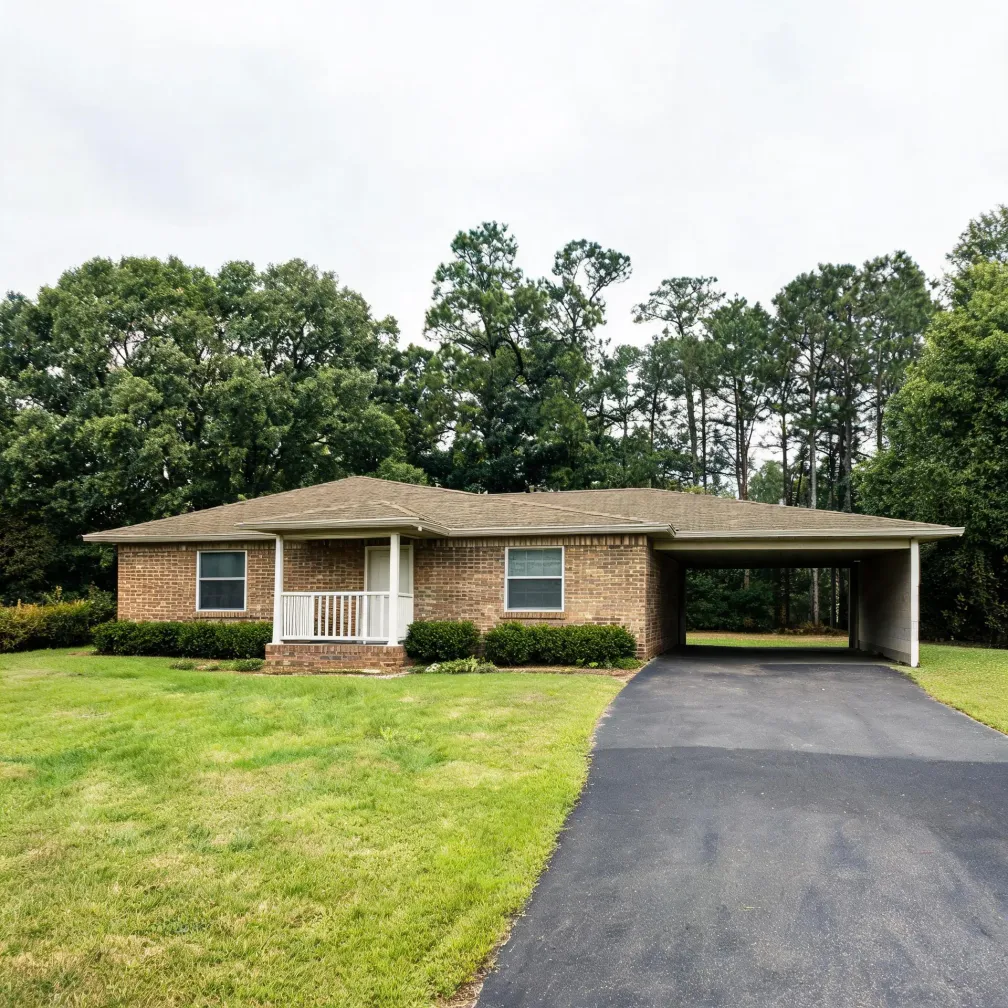
What Georgia homes are up against.
NOAA National Centers for Environmental Information, Storm Events Database, bulk CSV export, events 2015-01-01 through 2024-12-31. · U.S. Census Bureau, 2020-2024 American Community Survey 5-Year Estimates

A compressor sized too small for the space does not fail quietly here. Homes in Georgia run cooling about five months a year, from May through September. Across that stretch, the compressor is starting and stopping repeatedly, the condenser fan is running hard through the hottest part of the day, and the contactor is cycling through more operations than it would in a shorter season. A marginal installation reveals itself fast under that load. What a contractor has to settle before quoting is not just the unit's BTU rating but how the installation matches the specific space, because a mismatch that might survive a short season will not.
Before a contractor quotes a mini split job, the house gets opened up. Electrical panels have to be read, not assumed adequate. Ductwork, if there is any, has to be inspected for condition and routing before anyone decides whether to use it or work around it. Half the homes in Georgia were built in 1992 or earlier (2020-2024 ACS 5-year). That puts the contractor in a house where the service entry, the insulation, and whatever system was installed originally may all need assessment before a specification can be written. A quote produced without that walkthrough is a guess.
Does your county put extra wear on HVAC equipment?
2015–2024 · Source: NOAA National Centers for Environmental Information, Storm Events Database.
A condenser sitting outside faces whatever the sky delivers: hail impact, wind-driven debris, ice loading, flooding at the pad, and sustained heat that forces the refrigerant circuit to work at its limit for months at a time. Equipment sized and positioned without accounting for those conditions will underperform or fail ahead of schedule. The licensed contractor you are matched with knows what outdoor units in your county are up against and specs the job accordingly.
Georgia HVAC Installation and Repair License Requirements
Georgia sets its own licensing rules for HVAC installation and repair work, and the provisions below are drawn directly from state sources rather than paraphrased.
Georgia licenses conditioned air contractors in two classes and the size of the equipment decides which one is needed: a Class I licence is restricted to systems no larger than 175,000 BTU of heating and 60,000 BTU of cooling, and a Class II licence is unrestricted.
A state license for this trade defines who is legally permitted to perform HVAC work on your home. Hiring outside that boundary puts the work, and your home, in an uncertain position. The contractors this site routes requests to hold the license these provisions describe, and that is the filter every request passes through before it reaches anyone.
View the source provisions2 provisions
Georgia licenses conditioned air contractors in two classes and the size of the equipment decides which one is needed: a Class I licence is restricted to systems no larger than 175,000 BTU of heating and 60,000 BTU of cooling, and a Class II licence is unrestricted.
A Georgia conditioned air contractor licence is not granted on an application alone: the State Construction Industry Licensing Board requires documented field experience, a score of at least seventy on its examination, and its fees before it issues either class.