Tell us about the job
Takes about a minute. No obligation.
A contractor diagnosing a mini-split in Appling County starts with the compressor's age, the quality of the original install, and whether the system has been serviced at all. 69 severe weather events were recorded in Appling County, Georgia between 2015 and 2024. At that rate, severe weather is an event in this county, not a standing condition, which means a failed capacitor or a refrigerant leak is far more likely to trace back to a worn component or a shortcuts-heavy install than to storm load. A contractor who prices the job without checking those first is guessing.
A mini-split that has been running in a house this old has a repair history written inside it. Half the homes in Appling County, Georgia were built in 1986 or earlier (2020-2024 ACS 5-year). When a contractor opens a unit in stock like this, the coil condition and compressor wear are where the repair scope gets decided, and parts availability for systems of that age shapes the quote that follows. A straightforward fix and a more involved one often look the same from the outside.
The Parts of a Mini-split a Contractor Checks First
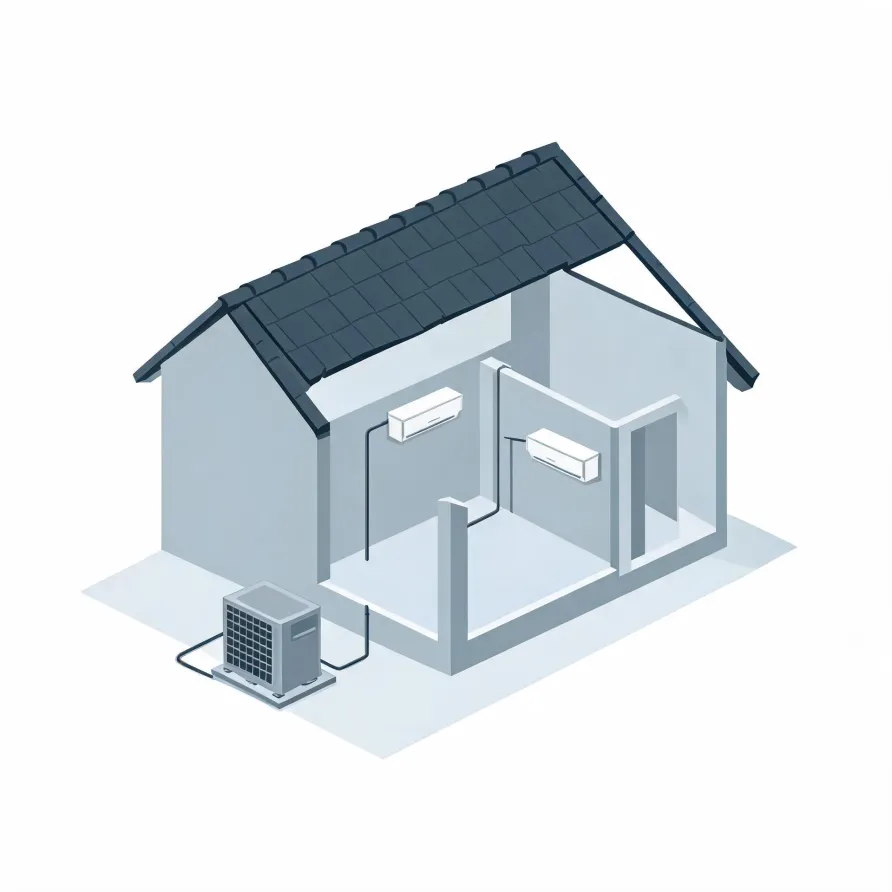
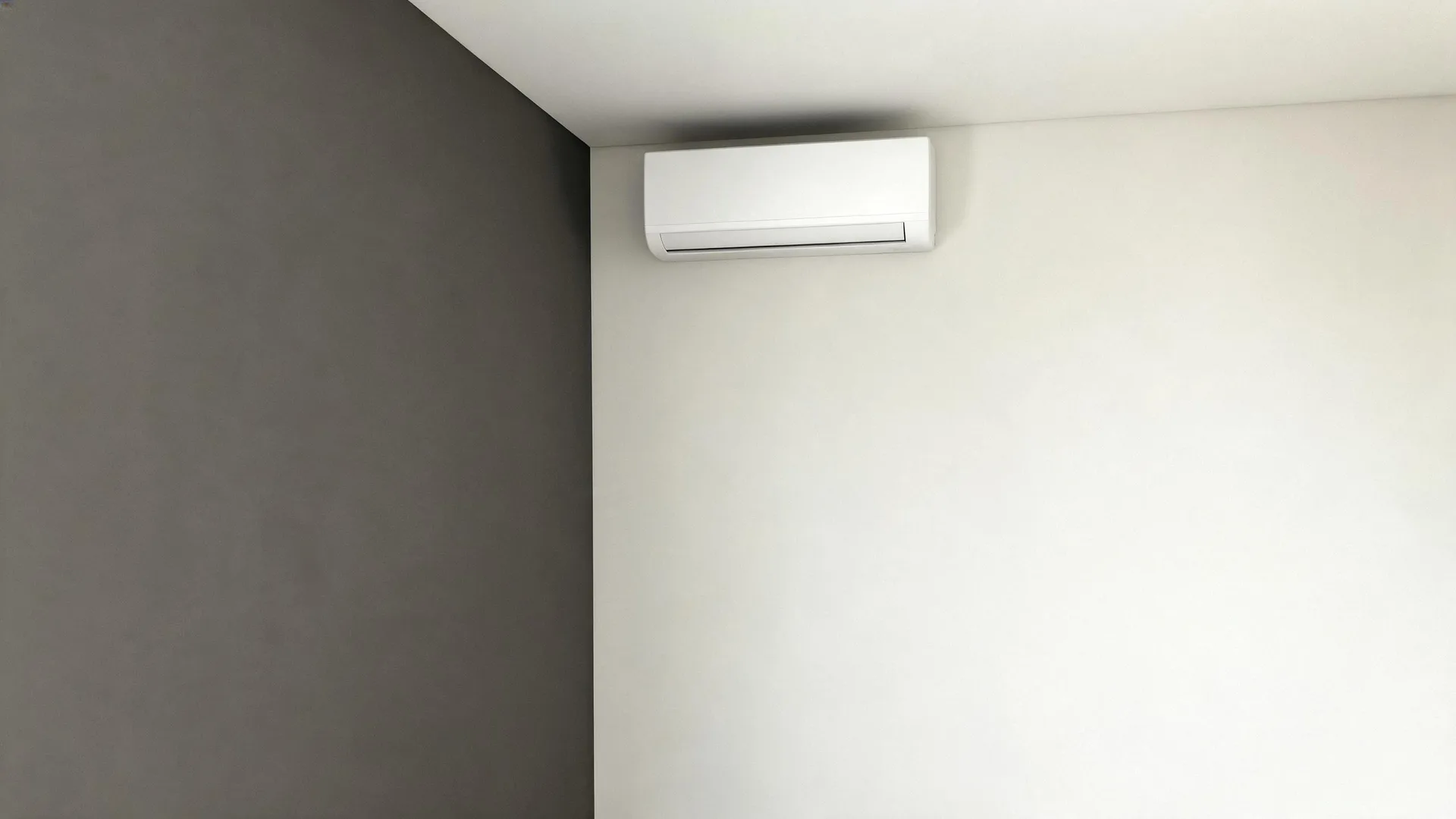
The indoor air handler mounts high on a wall inside the room and is the piece a homeowner notices most. It pulls room air across a coil and a blower, so when the system stops cooling or heating, or starts leaking water, the handler is where a contractor looks first. The coil, the blower wheel, and the drain line are all inside that cabinet.
The outdoor condenser unit sits on a pad or bracket outside the house and holds the compressor and the second coil. A pair of refrigerant lines and a power cable run through the wall to connect the two units. The electrical connections at both ends, the refrigerant charge in those lines, and the capacitors inside the outdoor cabinet are all points a contractor checks when diagnosing a fault.
The drawing shows a typical mini-split layout, and a licensed contractor determines which components and access points apply to your specific installation.
Get matched in Appling CountyAppling County, by the numbers
69 severe weather events were recorded in Appling County, Georgia between 2015 and 2024.
NOAA National Centers for Environmental Information, Storm Events Database, bulk CSV export, events 2015-01-01 through 2024-12-31.Half the homes in Appling County, Georgia were built in 1986 or earlier (2020-2024 ACS 5-year).
U.S. Census Bureau, 2020-2024 American Community Survey 5-Year EstimatesAppling County, Georgia holds 8,565 housing units (2020-2024 ACS 5-year).
U.S. Census Bureau, 2020-2024 American Community Survey 5-Year EstimatesOwners occupy 72.5% of the occupied homes in Appling County, Georgia (2020-2024 ACS 5-year).
U.S. Census Bureau, 2020-2024 American Community Survey 5-Year EstimatesSevere Weather Events in Appling County
Georgia's climate puts real stress on mini-split systems, and that stress compounds with every weather event a unit weathers. How hard the equipment works, and how often repairs become necessary, is a local question shaped by local conditions.
69 severe weather events, 2015–2024. Source: NOAA National Centers for Environmental Information, Storm Events Database.