Tell us about the job
Takes about a minute. No obligation.
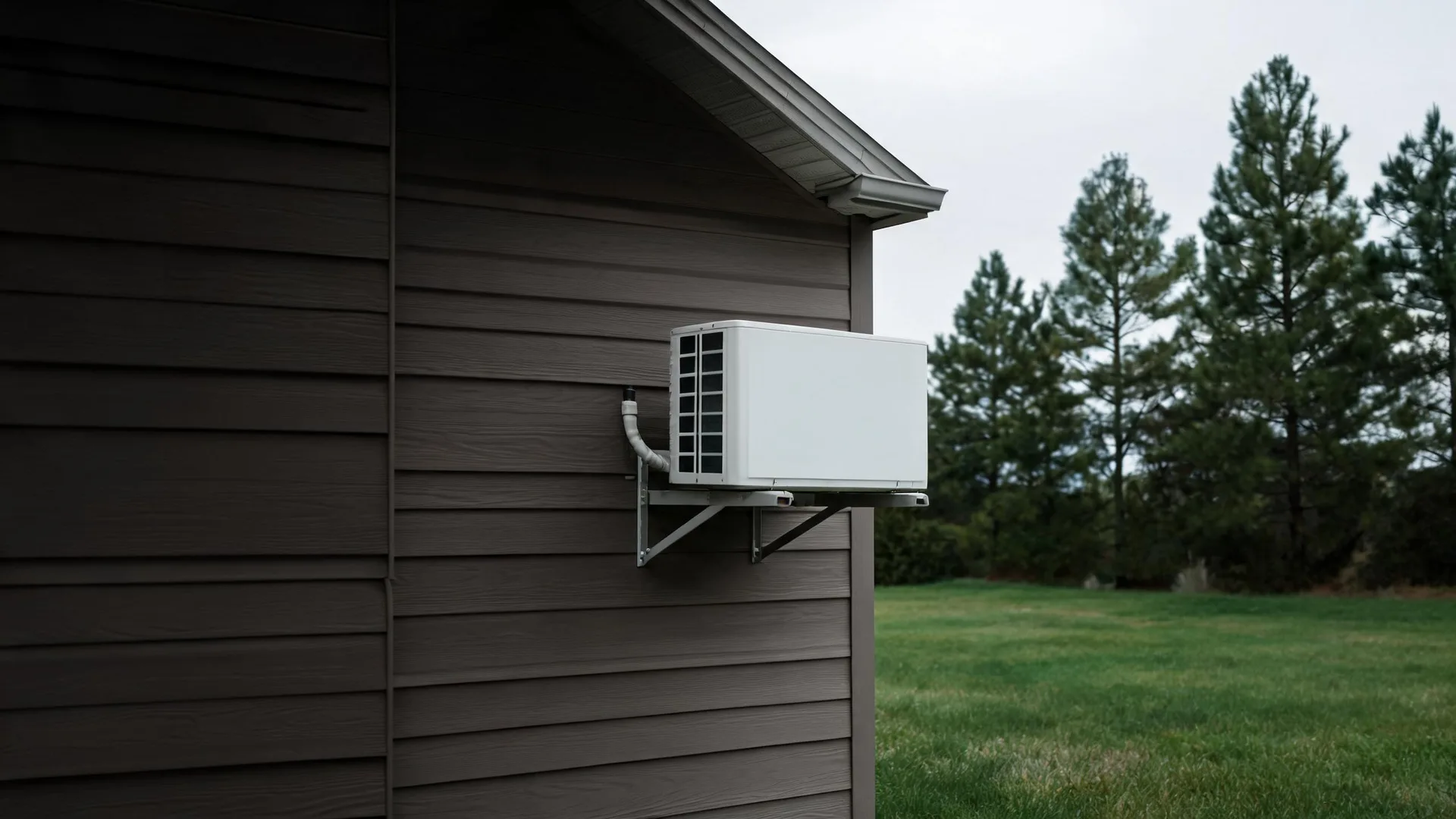
A contractor looking at a mini-split repair in Douglas County is not diagnosing something that failed in isolation. 141 severe weather events were recorded in Douglas County, Georgia between 2015 and 2024. At that rate, the refrigerant lines, the outdoor unit, and the condensate system in any home here have been working against a standing weather load, and the parts that give out first are the ones that carry that load longest. Wear on the expansion valve or the fan motor in this county is earned, not incidental, and a repair quote reflects what the equipment has actually been through.
Half the homes in Douglas County, Georgia were built in 1996 or earlier (2020-2024 ACS 5-year). A mini-split opened for repair in Douglas County is not being pulled from a house whose infrastructure is the story. Housing of this vintage was built in an era recent enough that what a contractor finds behind the walls is unlikely to drive the diagnosis sideways. The repair comes down to what is inside the unit: the condition of the coil, whether the refrigerant circuit held, and whether the parts the system takes are still in supply. The house is not where the job gets complicated.
The Parts of a Mini-split a Contractor Checks During Repair
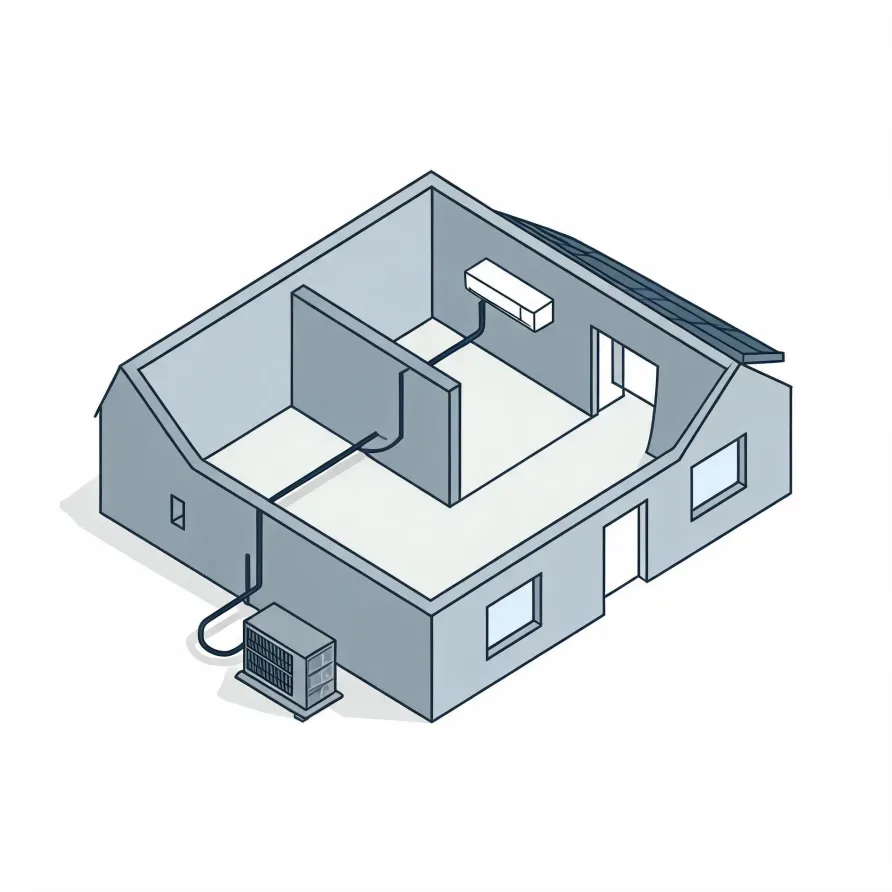
The indoor air handler mounts high on an interior wall and is where most visible problems show up first: ice buildup, water dripping, or air that stops moving. Inside it sit the evaporator coil and blower wheel, both of which a contractor pulls apart when the unit is not cooling, heating, or cycling the way it should.
The outdoor condenser unit holds the compressor and condenser coil, and it takes the hardest wear. The refrigerant line set and the condensate drain line run between the two units, and either one can be the source of a fault when the indoor and outdoor units both appear to be running fine.
The drawing shows a typical mini-split layout, and a licensed contractor determines which components apply and what condition they are in for this specific installation.
Get matched in Douglas CountyDouglas County, Georgia, by the numbers
141 severe weather events were recorded in Douglas County, Georgia between 2015 and 2024.
NOAA National Centers for Environmental Information, Storm Events Database, bulk CSV export, events 2015-01-01 through 2024-12-31.Half the homes in Douglas County, Georgia were built in 1996 or earlier (2020-2024 ACS 5-year).
U.S. Census Bureau, 2020-2024 American Community Survey 5-Year EstimatesDouglas County, Georgia holds 56,187 housing units (2020-2024 ACS 5-year).
U.S. Census Bureau, 2020-2024 American Community Survey 5-Year EstimatesOwners occupy 66.9% of the occupied homes in Douglas County, Georgia (2020-2024 ACS 5-year).
U.S. Census Bureau, 2020-2024 American Community Survey 5-Year EstimatesSevere Weather Events in Douglas County
Weather puts a direct load on heating and cooling equipment. How hard a mini-split works, and how often it gets pushed to its limits, is shaped by what the local climate actually does.
141 severe weather events, 2015–2024. Source: NOAA National Centers for Environmental Information, Storm Events Database.