Tell us about the job
Takes about a minute. No obligation.
A contractor quoting a mini-split installation in Lee County has to size the system for what the climate actually asks of it, not for an average load assumed from a spec sheet. 81 severe weather events were recorded in Lee County, Georgia between 2015 and 2024. Severe weather at that rate means the unit will cycle harder and longer during peak events, and a system that is undersized from day one loses the margin it needs to handle those stretches. Getting the load calculation right before the equipment is ordered is what separates an install that holds up from one that does not age well.
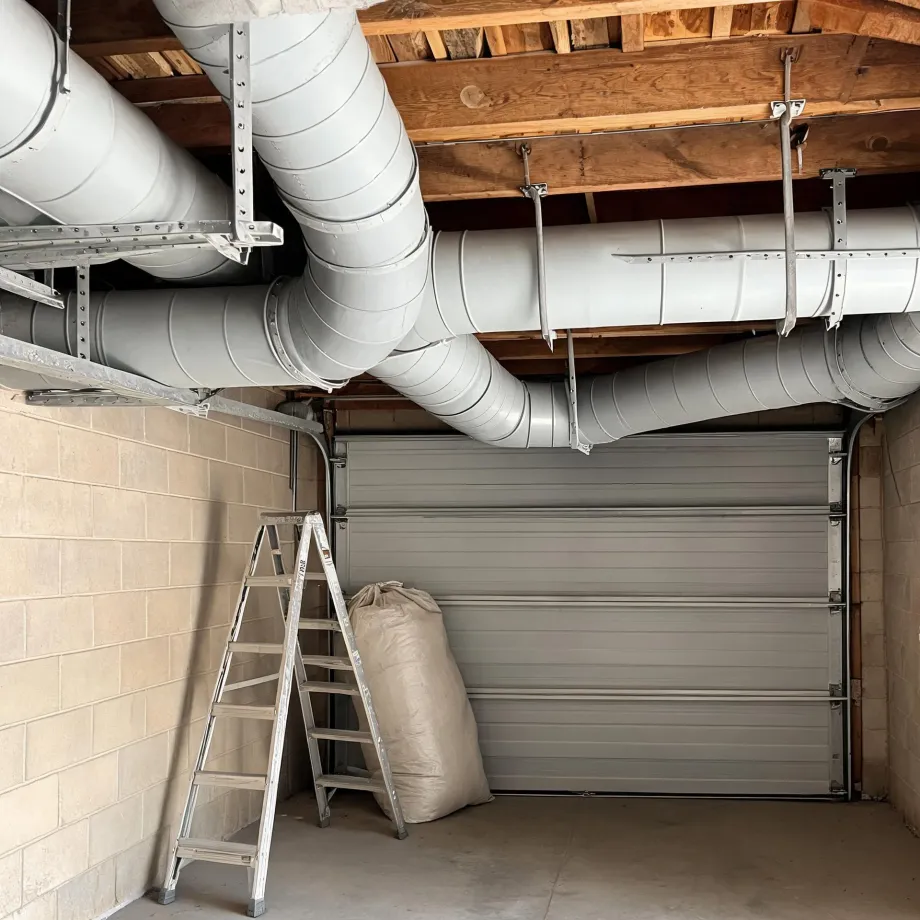
The electrical service in a house shapes a mini-split installation more than the unit itself does. Half the homes in Lee County, Georgia were built in 1998 or earlier (2020-2024 ACS 5-year). Wiring put in at that point in time was sized for the loads that existed then, and a mini-split's dedicated circuit demands a contractor to confirm the panel can support it before the job goes any further. If it cannot, the electrical work becomes part of the scope. That is a detail the quote has to reflect from the start.
What a Mini-split Installation Puts in Your Home
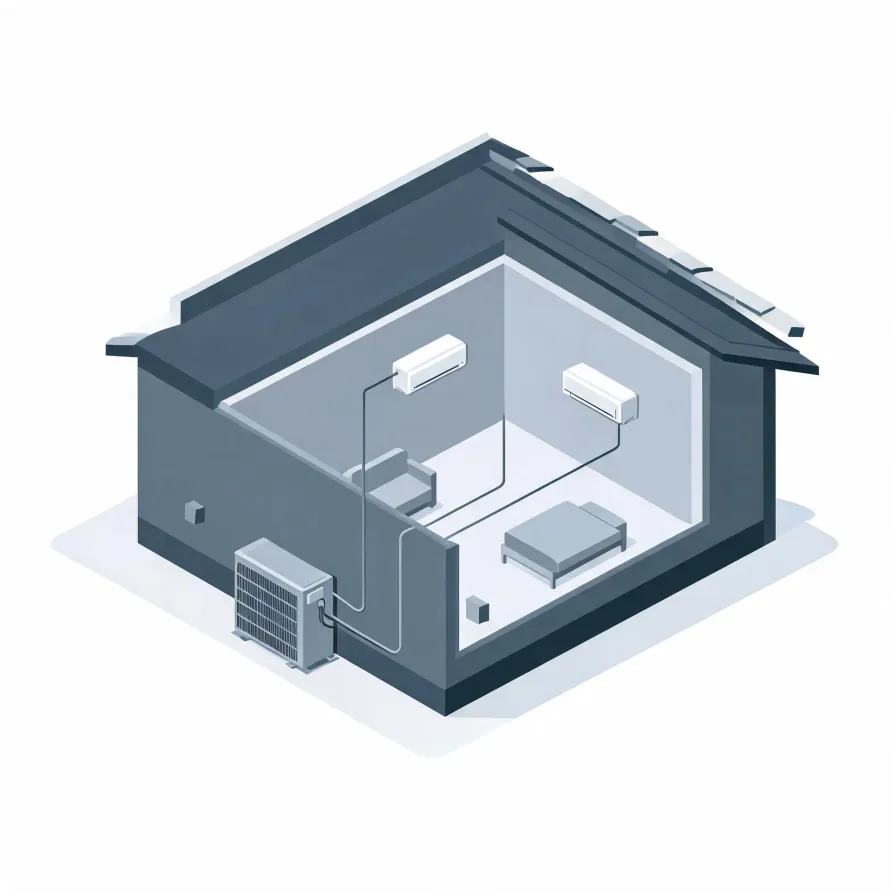
The indoor air handler mounts high on an interior wall, usually in the room being conditioned, and pushes treated air directly into that space. The outdoor unit sits on a pad or bracket outside the house and holds the compressor and condenser coil. These two pieces are the core of what a contractor installs.
A refrigerant line set runs through a small hole in the wall to connect the indoor and outdoor units, carrying refrigerant between them. A condensate drain line runs from the indoor handler to a suitable exit point, and a dedicated power cable ties the outdoor unit to its supply. Each of these runs gets routed and secured during the installation.
The drawing shows a typical layout, and a licensed contractor determines how each piece applies to your specific home.
Get matched in Lee CountyLee County, Georgia, by the numbers
81 severe weather events were recorded in Lee County, Georgia between 2015 and 2024.
NOAA National Centers for Environmental Information, Storm Events Database, bulk CSV export, events 2015-01-01 through 2024-12-31.Half the homes in Lee County, Georgia were built in 1998 or earlier (2020-2024 ACS 5-year).
U.S. Census Bureau, 2020-2024 American Community Survey 5-Year EstimatesLee County, Georgia holds 13,012 housing units (2020-2024 ACS 5-year).
U.S. Census Bureau, 2020-2024 American Community Survey 5-Year EstimatesOwners occupy 74.2% of the occupied homes in Lee County, Georgia (2020-2024 ACS 5-year).
U.S. Census Bureau, 2020-2024 American Community Survey 5-Year EstimatesSevere Weather Events in Lee County
Weather patterns shape how hard heating and cooling equipment has to work, and how long it lasts doing it. A mini-split sized and installed for local conditions holds up better than one spec'd without them, which is why the weather record here matters to this job.
81 severe weather events, 2015–2024. Source: NOAA National Centers for Environmental Information, Storm Events Database.