Tell us about the job
Takes about a minute. No obligation.
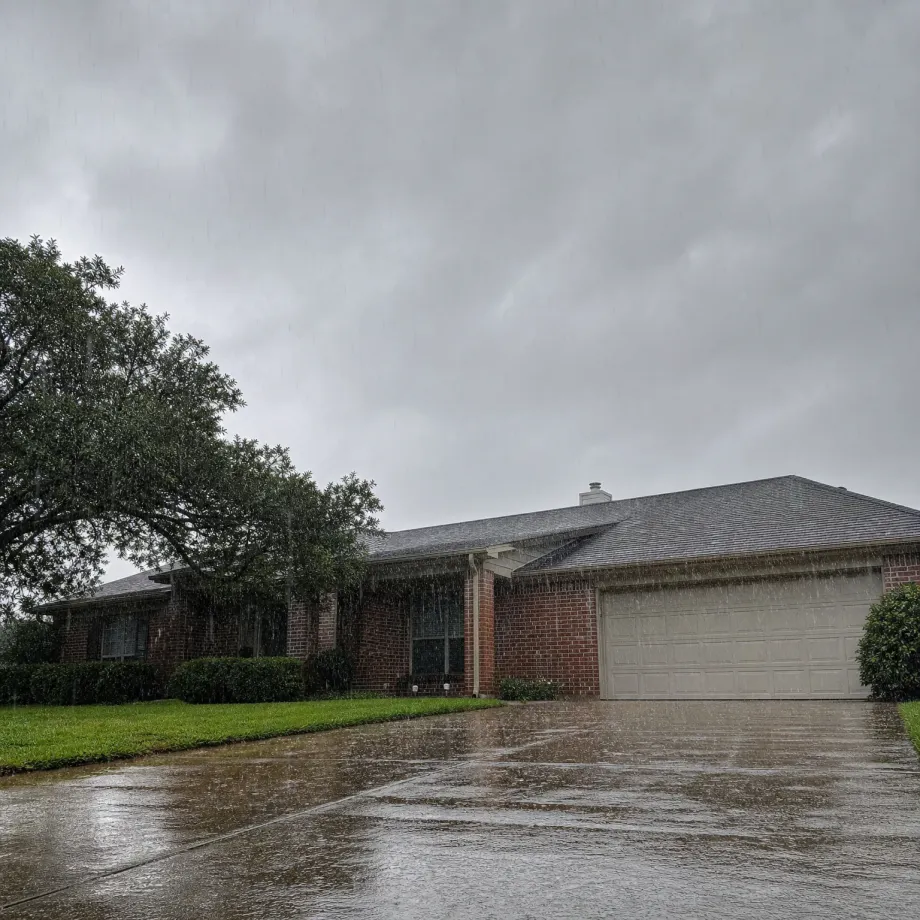
Sizing a mini-split in Worth County means working out what the unit will face, not just how many square feet it needs to condition. 179 severe weather events were recorded in Worth County, Georgia between 2015 and 2024. At that rate, severe weather is a standing condition, and a contractor who ignores it when selecting equipment capacity and specifying mounting locations is leaving the system undersized for what the area actually delivers. A unit matched to the load on paper but not to this climate will run harder and longer than the manufacturer's ratings assumed.
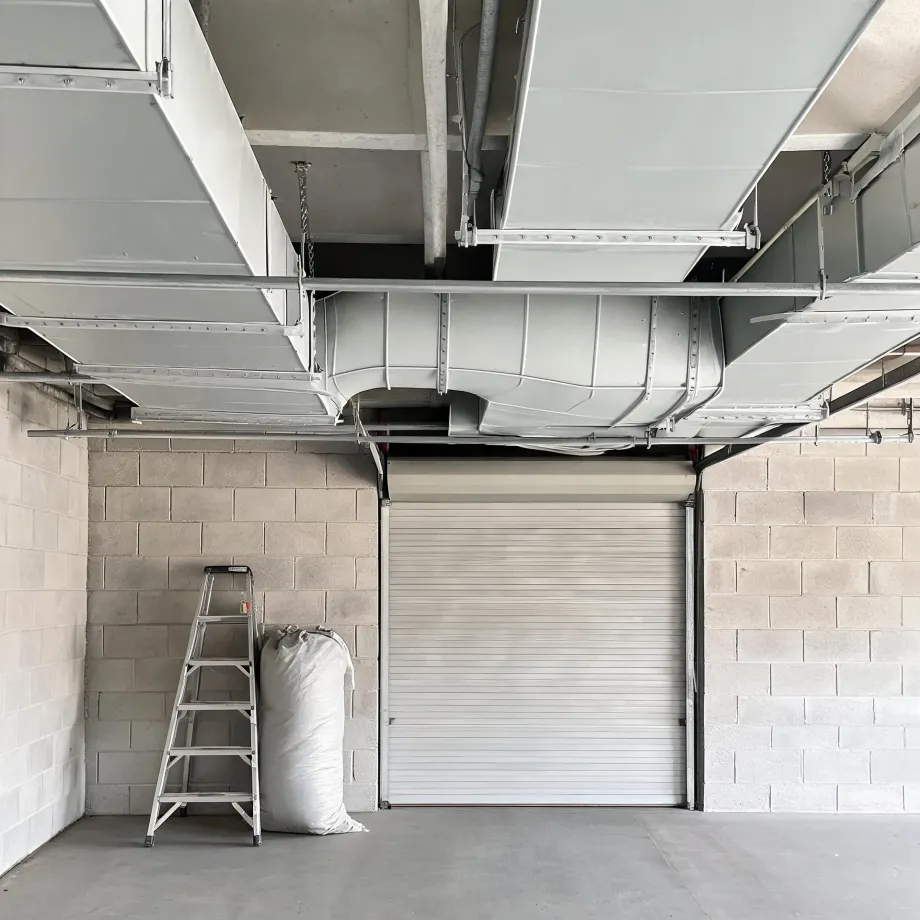
Older electrical panels are where a mini-split installation in Worth County tends to slow down. Half the homes in Worth County, Georgia were built in 1985 or earlier (2020-2024 ACS 5-year). A home built for the heating and cooling equipment of that era carried a service panel sized to match it, and a mini-split draws differently than what those panels were designed around. A contractor will open the panel, check what capacity is already spoken for, and decide whether the service needs to be brought up before the new unit can run safely.
What a Mini-split Installation Puts in Your Home
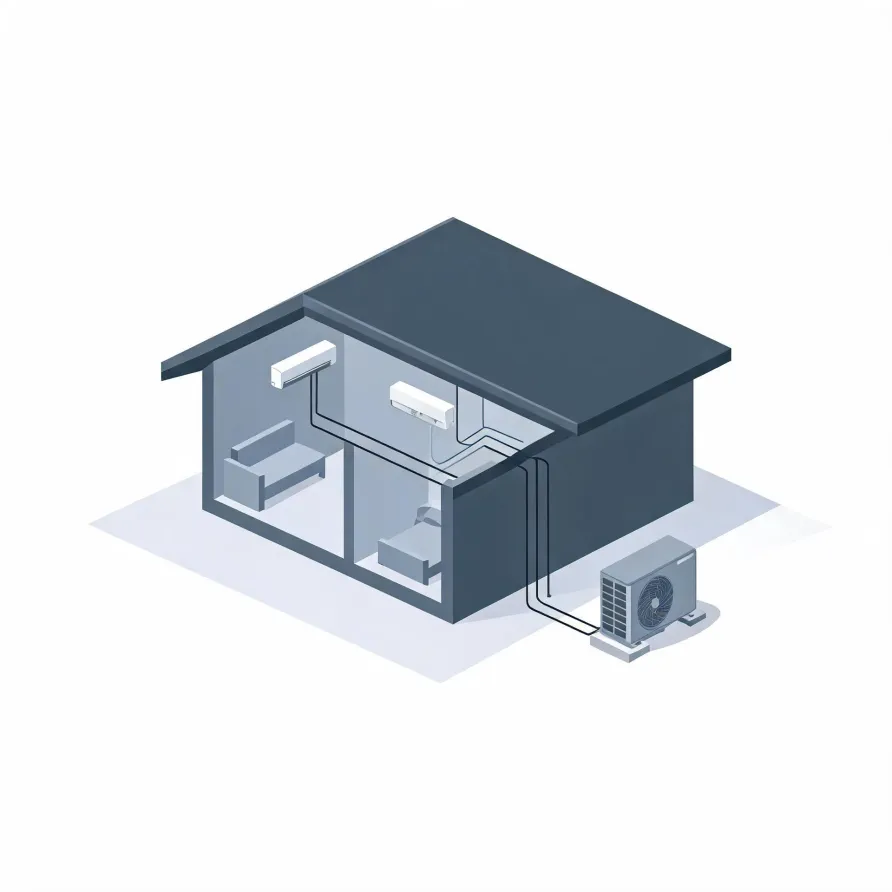
The indoor air handler mounts high on an interior wall in the room being conditioned, where it draws in room air and delivers conditioned air back out. The outdoor unit sits on the ground or a bracket outside the building and houses the compressor and condenser coil, doing the heavy mechanical work of the system.
A conduit bundle runs through a small opening in the wall to connect the two units, carrying the refrigerant lines, the power line, and the condensate drain. A mounting plate behind the indoor head anchors it to the wall, and a condensate line carries moisture from the indoor unit to a drain point outside.
The drawing beside this text shows the general layout of a mini-split system, and a licensed contractor determines exactly how each piece applies to your home.
Find a contractor in Worth CountyWorth County, Georgia, by the numbers
179 severe weather events were recorded in Worth County, Georgia between 2015 and 2024.
NOAA National Centers for Environmental Information, Storm Events Database, bulk CSV export, events 2015-01-01 through 2024-12-31.Half the homes in Worth County, Georgia were built in 1985 or earlier (2020-2024 ACS 5-year).
U.S. Census Bureau, 2020-2024 American Community Survey 5-Year EstimatesWorth County, Georgia holds 9,326 housing units (2020-2024 ACS 5-year).
U.S. Census Bureau, 2020-2024 American Community Survey 5-Year EstimatesOwners occupy 73.7% of the occupied homes in Worth County, Georgia (2020-2024 ACS 5-year).
U.S. Census Bureau, 2020-2024 American Community Survey 5-Year EstimatesSevere Weather Events in Worth County
Weather patterns in this part of Georgia set the real workload for heating and cooling equipment. A mini-split sized and installed for local conditions handles that workload without being pushed past what it was built to do.
179 severe weather events, 2015–2024. Source: NOAA National Centers for Environmental Information, Storm Events Database.