Tell us about the job
Takes about a minute. No obligation.
A contractor diagnosing a mini-split repair here has to account for what the system has been running against. 87 severe weather events were recorded in Fayette County, Georgia between 2015 and 2024. At that rate, severe weather is a regular part of operating life in this area, not an exceptional season that stands out from the rest. That sustained load works on refrigerant lines, outdoor unit components, and drainage over time. A contractor will check those first, but if they find a failed part that points to age or a sloppy original install, the weather record does not change that conclusion.
Refrigerant lines and control boards in a mini-split tied to housing this age have been sourced, replaced, and sometimes substituted more than once. Half the homes in Fayette County, Georgia were built in 1993 or earlier (2020-2024 ACS 5-year). When a contractor opens a unit in stock like this, the first real question is whether the replacement parts that system takes are still in production or have been superseded by components that do not fit the same mounts and connectors. If the answer is the latter, the repair scope changes before a single part is ordered.
The Parts of a Mini-split a Contractor Checks First
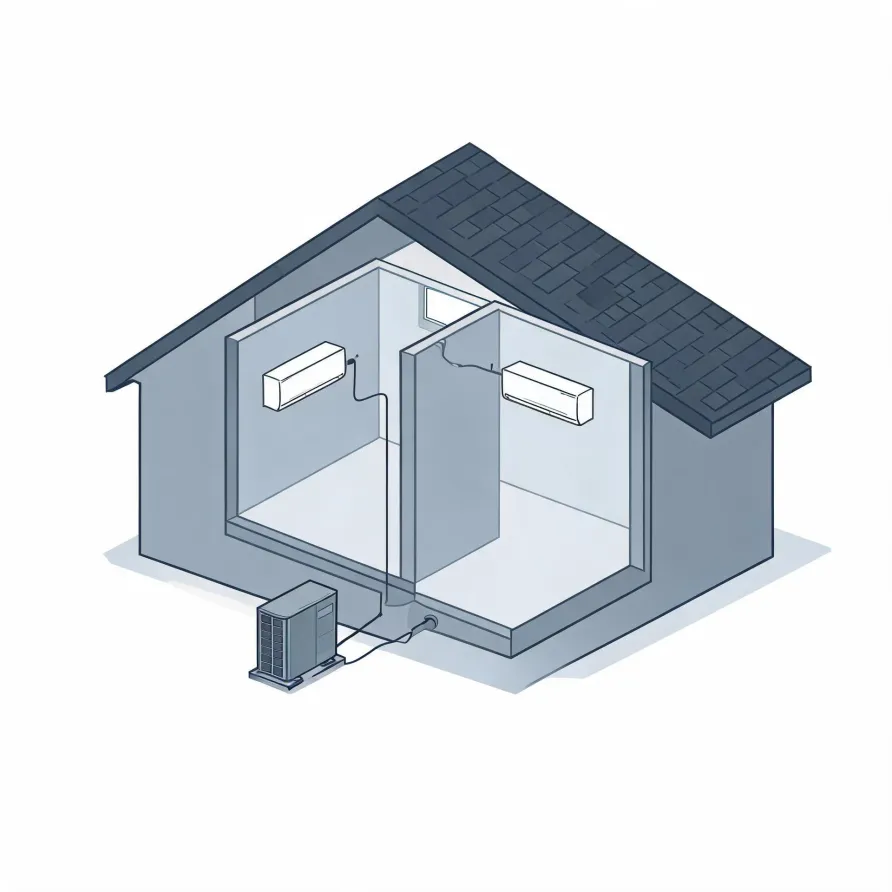
The indoor air handler mounts high on a wall inside the room and is where most visible problems show up first: a frozen coil, a blocked drain line, or a fan that has stopped moving air. The outdoor condenser unit sits on a pad or bracket outside and houses the compressor, which is the component contractors look at when the system runs but fails to condition the air.
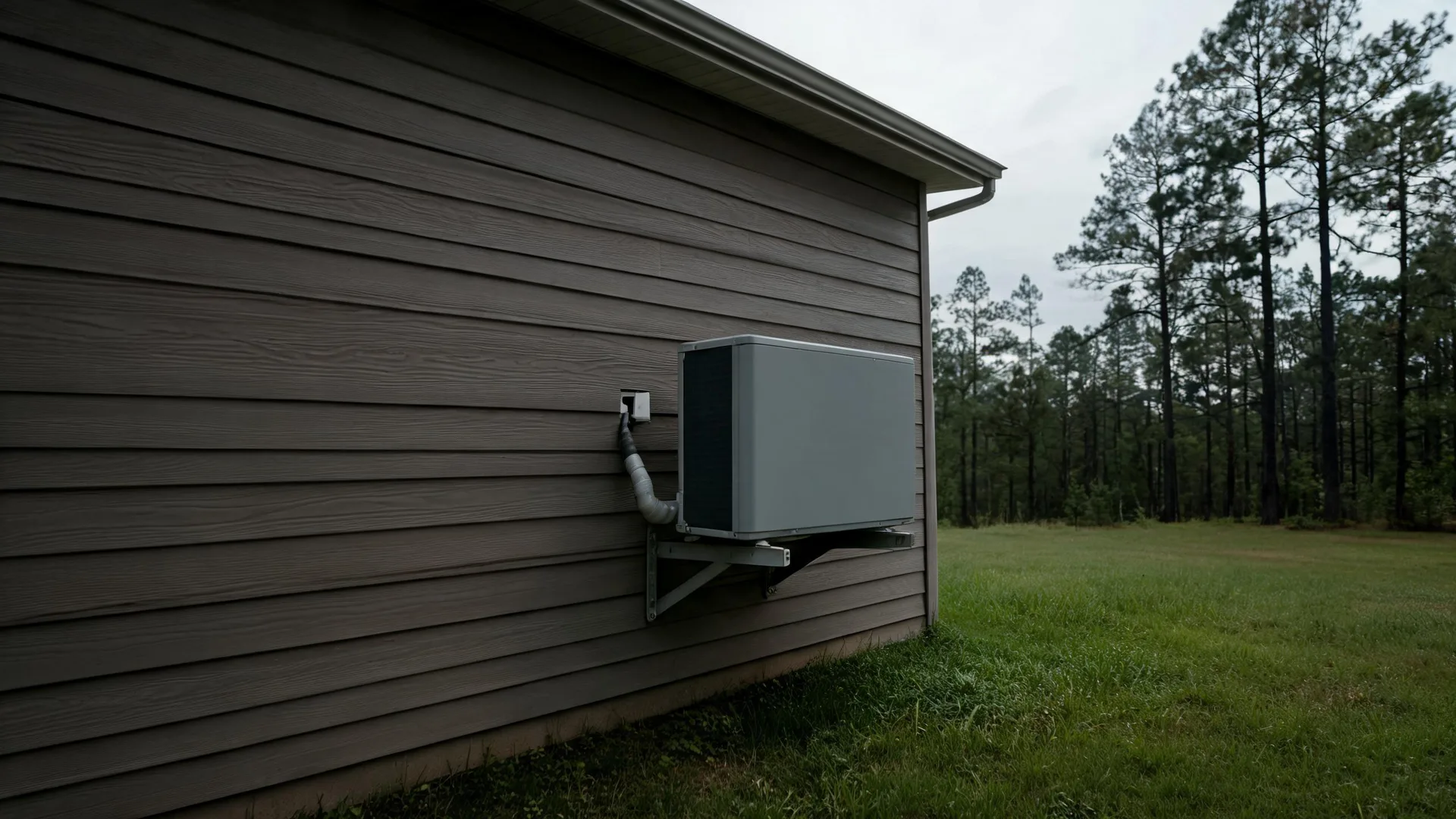
A refrigerant line set runs between the two units through a small penetration in the wall, and a fault anywhere along it can mimic problems that look like they belong to either unit. A condensate drain carries moisture away from the air handler, and a blockage there often reads as a water leak before anything else fails.
The drawing shows a typical mini-split layout, and a licensed contractor determines what applies to your specific installation.
Get matched in Fayette CountyFayette County by the numbers
87 severe weather events were recorded in Fayette County, Georgia between 2015 and 2024.
NOAA National Centers for Environmental Information, Storm Events Database, bulk CSV export, events 2015-01-01 through 2024-12-31.Half the homes in Fayette County, Georgia were built in 1993 or earlier (2020-2024 ACS 5-year).
U.S. Census Bureau, 2020-2024 American Community Survey 5-Year EstimatesFayette County, Georgia holds 46,453 housing units (2020-2024 ACS 5-year).
U.S. Census Bureau, 2020-2024 American Community Survey 5-Year EstimatesOwners occupy 80.1% of the occupied homes in Fayette County, Georgia (2020-2024 ACS 5-year).
U.S. Census Bureau, 2020-2024 American Community Survey 5-Year EstimatesSevere Weather Events in Fayette County
Weather puts a direct load on heating and cooling equipment, and that load shapes how hard a mini-split works, how often it cycles, and what wears first. Repair needs in Fayette County track local conditions, which is why the data below belongs on this page.
87 severe weather events, 2015–2024. Source: NOAA National Centers for Environmental Information, Storm Events Database.